
Martial Arts Library
Wushu (Sport Kung Fu)
6/18/2026 · Diego Alvarez
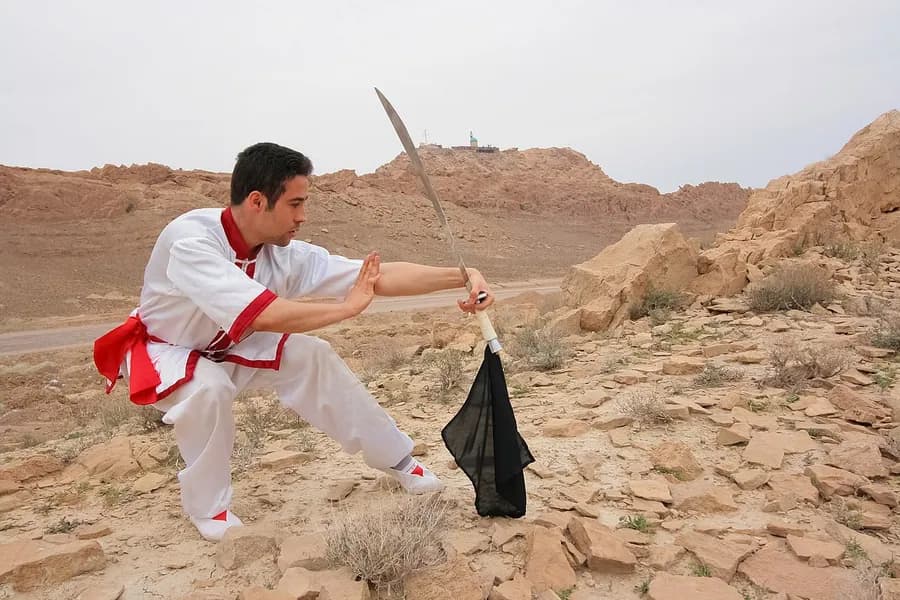
Origin
China, formalized in 1950s; modern sport version developed as international competition format
Primary Focus
Acrobatic movements, aerial techniques, artistic presentation, and sport competition
What It Is
Wushu is a modern formalized martial art developed from Chinese martial traditions, emphasizing acrobatic movements, artistic presentation, and standardized competition formats.
History Snapshot
Wushu is the umbrella term for Chinese martial arts, but in its modern sense it refers to the standardized competition sport organized in China after 1949. It spread internationally through the International Wushu Federation, founded in 1990, and now spans both forms and full-contact sparring.
What It Is
"Wushu" literally means "martial art" in Chinese and is the proper umbrella name for the entire vast family of Chinese fighting styles once loosely called kung fu in the West. In everyday modern usage, though, the word usually points to something more specific: the standardized competitive sport built out of those traditions in the second half of the 20th century. That sport has two faces. Taolu, the forms side, is what dazzles audiences, choreographed routines packed with leaps, spins, and weapon flourishes, scored like gymnastics for difficulty and execution. Sanda (or sanshou), the combat side, is a full-contact kickboxing-and-throwing format. Together they package China's martial heritage into a form the modern athletic world can judge and compare.
Origins and History
The deep roots of wushu reach back thousands of years into Chinese military training, folk practice, and temple traditions, the same well that fed Shaolin boxing, tai chi, and hundreds of regional styles. But the thing we specifically call modern Wushu is a 20th-century creation with a clear political backdrop. After the founding of the People's Republic of China in 1949, the new government took an active interest in the country's martial arts. Traditional kung fu was enormously diverse, decentralized, and tangled up with clan loyalties, secret societies, and old-world superstition, none of which fit comfortably with the modernizing, unifying aims of the state.
The response was standardization. Through the 1950s, official bodies worked to organize the sprawling martial landscape into a coherent, teachable, performable system, emphasizing health, athleticism, and national culture while stripping away much of the combat-application detail and mysticism. A national governing structure was established, standardized routines were written, and Wushu was promoted as a wholesome mass sport and a showcase of Chinese identity. This process reshaped how the arts were taught: rather than a master passing down a lineage informally, students now learned graded, uniform forms designed for public performance and fair scoring. Like the Cultural Revolution period that complicated much of Chinese cultural life, these decades were not gentle on some older traditions, but they produced the polished sport recognized today.
Development Over Time
From a domestic project, Wushu grew into an international movement. As China opened up from the late 1970s and 1980s, the sport was exported energetically, aided by a wave of martial-arts cinema that made its acrobatic style globally famous; the young champion Jet Li, a multiple-time national Wushu titleholder before his film career, became its most recognizable face. The International Wushu Federation (IWUF) was founded in 1990 to govern the sport worldwide and stage World Wushu Championships, standardizing rules across forms and sanda alike. China has campaigned repeatedly, so far without success, to have Wushu included in the Olympic program, and a demonstration event was held alongside the 2008 Beijing Games. Meanwhile the sport keeps refining its difficulty standards, especially the demanding aerial jump-and-spin techniques that define elite taolu.
Core Techniques and Concepts
- Taolu (forms): Choreographed solo routines scored on difficulty, precision, rhythm, and presentation.
- Sanda (sanshou): A full-contact combat format combining kicks, punches, and throws.
- Nandu (difficulty movements): High-level jumps, spins, and landings that raise a routine's competitive score.
- Style divisions: Categories such as Changquan (long fist), Nanquan (southern fist), and Taijiquan showcase distinct traditions.
- Weapons routines: Forms performed with the staff, spear, straightsword, and broadsword.
Modern Practice and Relevance
Modern Wushu sits at the crossroads of sport, performance art, and cultural preservation, and it is important to be clear that competitive taolu is not a fighting method, it is an athletic display graded on beauty and difficulty. Its combat cousin, sanda, is a different story: as a practical striking-and-throwing system, it has produced legitimate fighters who have crossed over into kickboxing and MMA. Even for those who never compete, Wushu training builds extraordinary flexibility, explosiveness, body control, and spatial awareness, qualities that carry over to almost any physical discipline. For fans, it is both a spectacular show and a living link to the immense martial heritage of China.
Technical Deep Dive
Wushu (Sport Kung Fu) is most effective when practitioners can control the transition moments between range, rhythm, and balance. Those transition moments are where technical identity becomes visible under pressure.
A useful way to study this style is to separate visible techniques from invisible skills. The visible layer includes strikes, entries, grips, and finishes; the invisible layer includes posture management, timing discipline, and recovery decisions after failed attempts.
In weapons-influenced systems, understanding line control and timing windows is as important as tool mechanics. Clean positioning and tactical patience often matter more than speed alone.
Strengths
- Acrobatic movements, aerial techniques, artistic presentation, and sport competition
- Clear technical pathways that are easy to study and pressure-test
- Strong transfer into modern competition when timing and distance matter
Trade-offs
- Training quality varies widely between schools, so fundamentals matter more than labels
- Sport rules can sharpen some attributes while reducing others
- The style's original context may differ from how it is practiced today
Priority Focus
- Consistent drilling under light to medium pressure
- Testing fundamentals against resisting partners before advancing
- Building attributes from basic to complex
Coaching Notes
- Progress from cooperative drills to constrained sparring before full resistance
- Prioritize repeatable combinations and transitions over isolated highlight techniques
- Use video review to compare tactical intent with actual round behavior
- Track conditioning in relation to technical quality, not only output volume