
Martial Arts Library
Vale Tudo (Brazilian MMA)
6/18/2026 · Kenji Watanabe
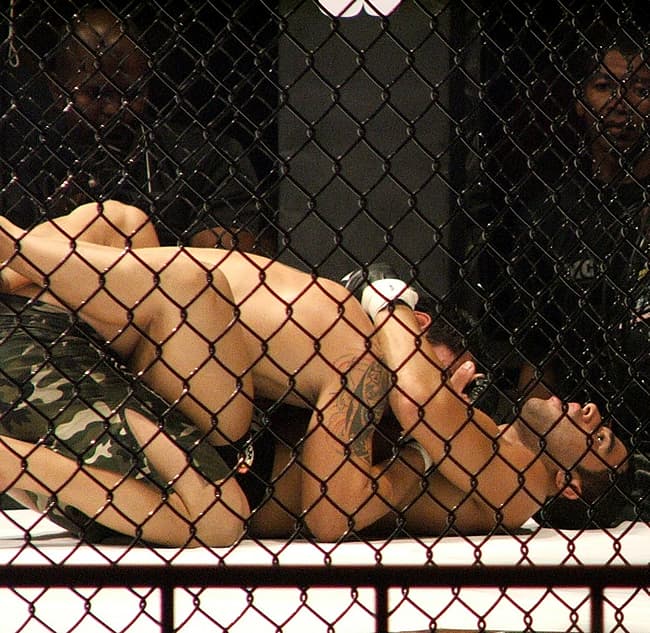
Origin
Brazil, emerged in mid-20th century as no-rules fighting challenge format
Primary Focus
No-rules fighting, striking, grappling, and hybrid combat
What It Is
Vale Tudo is a Brazilian fighting format with minimal rules, serving as a precursor to modern MMA and demonstrating the effectiveness of hybrid fighting before standardized competition.
History Snapshot
Vale Tudo, Portuguese for 'anything goes,' grew from early-20th-century Brazilian circus and challenge fights into a near-ruleless test of style versus style. Driven largely by the Gracie family's jiu-jitsu challenges, it became the direct blueprint for modern MMA.
What It Is
Vale Tudo means "anything goes" in Portuguese, and for most of its history the name was close to literal. It is the Brazilian tradition of near-ruleless fighting in which strikers, grapplers, and brawlers met with almost no restrictions, no weight classes to speak of, sometimes no rounds, and a very short list of fouls. The point was never sport for its own sake; it was to answer a blunt question that martial artists had argued about forever: which style actually works when a real fight has no referee stopping the action every few seconds. That stripped-down, style-versus-style ethos is exactly why Vale Tudo is remembered as the raw ancestor of modern mixed martial arts.
Origins and History
Vale Tudo grew out of Brazil's entertainment and challenge-fight culture in the first half of the 20th century. In the 1920s and 1930s, traveling circuses and carnivals in Brazil often featured fighters who would take on all comers, and these open challenges blurred the line between spectacle and genuine contest. Into this environment came Japanese judo and jiu-jitsu, carried to Brazil by immigrants and traveling martial artists, most famously the judoka Mitsuyo Maeda, who settled in the north of the country. Maeda's instruction of the young Carlos Gracie is the traditional starting point for the Gracie family's jiu-jitsu, the style that would define Vale Tudo for generations.
The Gracies were relentless promoters. Carlos and especially his brother Helio issued open challenges, the famous "Gracie Challenge," inviting fighters of any style to test themselves against their jiu-jitsu with minimal rules. Through the 1950s and 1960s these matches, some staged in gyms, some in stadiums, some broadcast on early television, made Vale Tudo a national talking point and repeatedly showcased how a grappler who could take a fight to the ground and control it there could beat larger, stronger strikers. Helio Gracie's long, grinding bouts against opponents like the judoka Masahiko Kimura and later Waldemar Santana became legends, win or lose. This era hardened the core lesson that would echo for decades: on the ground, positional control and submissions changed everything.
Development Over Time
For much of the mid-20th century Vale Tudo lived at the edges of legality and respectability, thriving in gyms and on regional TV shows while periodically being banned for its brutality. Its most consequential export came in the early 1990s, when members of the Gracie family carried the concept to the United States. Rorion Gracie helped create the Ultimate Fighting Championship in 1993 as, essentially, a Vale Tudo tournament staged for American audiences, and his brother Royce Gracie won the early events, stunning viewers by submitting far bigger men. That success detonated worldwide interest in cross-training and grappling. Back in Brazil, promotions like the International Vale Tudo Championship kept the harder, closer-to-ruleless format alive through the 1990s, until mounting safety concerns and regulation gradually pushed the sport toward the codified, gloved, weight-classed structure we now call MMA.
Core Techniques and Concepts
- Style-versus-style testing: The defining premise is pitting different systems against each other under minimal rules.
- Ground dominance: Positional control and submissions, drawn from Brazilian jiu-jitsu, were the decisive edge for decades.
- Takedowns as strategy: Closing distance and forcing the fight to the mat neutralized pure strikers.
- Striking and grappling integration: Both ranges were live, rewarding fighters who could function everywhere.
- Minimal rules and conditioning: Few restrictions and long fights demanded durability, composure, and stamina.
Modern Practice and Relevance
Vale Tudo's direct legacy is the entire sport of mixed martial arts. Nearly every convention of modern MMA, the primacy of grappling, the necessity of cross-training, the whole idea of a promotion built around rival styles colliding, traces back to those Brazilian challenge matches and the Gracie era. Today "Vale Tudo" survives partly as a historical term and partly as a label for a handful of throwback, lighter-regulation events, but its real monument is the UFC and its global imitators. For anyone trying to understand why the complete fighter dominates today's cages, the road runs straight back through Brazil.
Technical Deep Dive
Vale Tudo (Brazilian MMA) is most effective when practitioners can control the transition moments between range, rhythm, and balance. Those transition moments are where technical identity becomes visible under pressure.
A useful way to study this style is to separate visible techniques from invisible skills. The visible layer includes strikes, entries, grips, and finishes; the invisible layer includes posture management, timing discipline, and recovery decisions after failed attempts.
In grappling-heavy contexts, the deepest competitive edge usually comes from connection quality rather than move count. Hand-fighting, shoulder pressure, and angle denial often decide outcomes before obvious scoring actions appear.
In striking-heavy contexts, this style rewards athletes who can maintain stance integrity while changing pace. Distance ownership, exit discipline, and defensive resets determine whether offensive output remains sustainable late in rounds.
Strengths
- No-rules fighting, striking, grappling, and hybrid combat
- Clear technical pathways that are easy to study and pressure-test
- Strong transfer into modern competition when timing and distance matter
- Reliable clinch and control structures that reward leverage over raw strength
Trade-offs
- Training quality varies widely between schools, so fundamentals matter more than labels
- Sport rules can sharpen some attributes while reducing others
- The style's original context may differ from how it is practiced today
- Ground-heavy systems can be harder to apply against strong anti-grappling or striking-heavy opponents without cross-training
Priority Focus
- Consistent drilling under light to medium pressure
- Testing fundamentals against resisting partners before advancing
- Building attributes from basic to complex
- Develop footwork, head movement, and distance management
- Practice position control and transitions before submissions
Coaching Notes
- Progress from cooperative drills to constrained sparring before full resistance
- Prioritize repeatable combinations and transitions over isolated highlight techniques
- Use video review to compare tactical intent with actual round behavior
- Track conditioning in relation to technical quality, not only output volume
- Build positional chains first, then layer submissions once control is consistent
- Drill entries and exits as one unit so offense and defense stay connected