
Martial Arts Library
Shito-ryu Karate
6/18/2026 · Sofia Marchetti
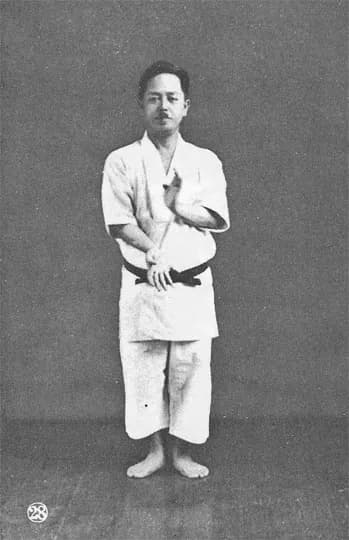
Origin
Okinawa, Japan; formalized in early 20th century by Kenwa Mabuni
Primary Focus
Balanced hard and soft techniques, rapid combinations, and practical applications
What It Is
Shito-ryu is a traditional Okinawan karate style that unites the hard, rooted power of Naha-te with the swift, linear movement of Shuri-te, preserving one of the largest kata catalogs in karate.
History Snapshot
Shito-ryu was founded by Kenwa Mabuni, who trained under two of Okinawa's greatest masters, Anko Itosu and Kanryo Higaonna, and blended their contrasting methods into a single system in the early twentieth century. It grew into one of the four major Japanese karate styles and spread worldwide through Mabuni's students and their organizations.
What It Is
Shito-ryu is one of the four styles usually named as the pillars of modern Japanese karate, alongside Shotokan, Goju-ryu, and Wado-ryu. Its defining feature is a deliberate balance between two temperaments. On one side sits the hard, grounded, breathing-driven power inherited from the Naha lineage; on the other, the fast, upright, linear striking of the Shuri lineage. Rather than choosing between them, Shito-ryu tries to hold both in tension, producing a style comfortable with heavy close-range technique and quick combination striking alike. It is also famous for the sheer size of its kata syllabus, one of the largest in all of karate.
Origins and History
The story of Shito-ryu is really the story of one man's education. Its founder, Kenwa Mabuni, was born in Okinawa in the 1880s, into a period when the island's fighting traditions were beginning to move out of secrecy and into more open, organized teaching. Okinawa had developed several regional streams of te — literally "hand" — that took their names from the towns where they flourished, chiefly Shuri-te, Naha-te, and Tomari-te. These were shaped over generations by contact with Chinese martial arts and by the particular history of the island, and by Mabuni's youth they were carried by a handful of revered masters.
Mabuni had the good fortune, and the persistence, to study under two of the greatest of them. From Anko Itosu he learned the Shuri-te tradition — a system known for its dynamic, comparatively upright movement and its extensive collection of kata. Itosu is a towering figure in karate history, credited with helping bring karate into Okinawan schools and with organizing many of the forms that later styles inherited. From Kanryo Higaonna, Mabuni absorbed Naha-te, the tradition marked by rooted stances, powerful close-range work, and an emphasis on breathing and body conditioning — the same source from which Goju-ryu also sprang.
Standing at the meeting point of these two lineages, Mabuni made an unusual choice. Instead of simply passing on one or the other, he set out to preserve both. When he formalized his own system, he honored his teachers directly in the name: the style's title is built from characters associated with Itosu and Higaonna, a quiet acknowledgment that Shito-ryu is the sum of the two men who shaped him. This synthesis, worked out over the early decades of the twentieth century, is the foundation of the style.
Development Over Time
Like many Okinawan masters of his generation, Mabuni eventually looked to mainland Japan to secure karate's future. In the 1920s and 1930s, karate was being introduced to Japanese audiences and reorganized to fit Japanese martial-arts conventions, including uniforms, ranks, and dojo structures. Mabuni relocated to the Osaka area and worked to establish Shito-ryu there, teaching, demonstrating, and building the institutional base that would let the style outlive him.
After his passing in the mid-twentieth century, Shito-ryu did what many successful systems do: it branched. Different senior students and family members carried the art forward under a range of organizational banners, each preserving the core identity while emphasizing particular aspects of training or competition. This has made Shito-ryu something of a family of related lineages rather than a single monolithic school, but the shared inheritance — the vast kata library and the hard-soft balance — keeps them recognizably one style. Through this network the art spread across Japan and then internationally, becoming a fixture of sport-karate competition worldwide.
Core Techniques and Concepts
- Hard-soft synthesis — the deliberate union of Naha-te power and Shuri-te speed sits at the heart of the style.
- Extensive kata — Shito-ryu preserves an unusually large catalog of forms drawn from both parent traditions.
- Rapid combinations — flowing, quick sequences of strikes exploit openings before an opponent can reset.
- Rooted and mobile stances — the style trains both deep, grounded postures and lighter, faster positioning.
- Breathing and body coordination — controlled breathing links power generation to technique, a Naha inheritance.
- Bunkai (application) — kata are studied not as choreography but as encoded fighting solutions.
Modern Practice and Relevance
Today Shito-ryu is practiced around the globe, both as a traditional budo and as a competitive sport, and it has been well represented on the international karate tournament stage. Its balanced approach makes it a rich resource for anyone studying striking: the quick-combination game rewards timing and distance, while the rooted power work builds the kind of structure that generates real force. For modern combat-sports athletes who cross-train karate, Shito-ryu offers a broad technical vocabulary and, in its kata, a systematic library of movement to mine for application — a reminder that traditional forms, read properly, still have practical fighting logic inside them.
Technical Deep Dive
Shito-ryu Karate is most effective when practitioners can control the transition moments between range, rhythm, and balance. Those transition moments are where technical identity becomes visible under pressure.
A useful way to study this style is to separate visible techniques from invisible skills. The visible layer includes strikes, entries, grips, and finishes; the invisible layer includes posture management, timing discipline, and recovery decisions after failed attempts.
In striking-heavy contexts, this style rewards athletes who can maintain stance integrity while changing pace. Distance ownership, exit discipline, and defensive resets determine whether offensive output remains sustainable late in rounds.
Strengths
- Balanced hard and soft techniques, rapid combinations, and practical applications
- Clear technical pathways that are easy to study and pressure-test
- Strong transfer into modern competition when timing and distance matter
- Useful footwork, tempo control, and scoring mechanics under pressure
Trade-offs
- Training quality varies widely between schools, so fundamentals matter more than labels
- Sport rules can sharpen some attributes while reducing others
- The style's original context may differ from how it is practiced today
- Pure striking systems may need clinch and takedown defense layers for mixed-rule environments
Priority Focus
- Consistent drilling under light to medium pressure
- Testing fundamentals against resisting partners before advancing
- Building attributes from basic to complex
Coaching Notes
- Progress from cooperative drills to constrained sparring before full resistance
- Prioritize repeatable combinations and transitions over isolated highlight techniques
- Use video review to compare tactical intent with actual round behavior
- Track conditioning in relation to technical quality, not only output volume
- Drill entries and exits as one unit so offense and defense stay connected