
Martial Arts Library
Lethwei
6/17/2026 · Marcus Delgado
Origin
Myanmar (Burma)
Primary Focus
Bareknuckle striking with punches, kicks, elbows, knees, and headbutts
What It Is
Lethwei is the traditional bareknuckle striking sport of Myanmar, fought with cloth-wrapped hands and permitting headbutts alongside the eight limbs of Muay Thai.
History Snapshot
Lethwei grew out of the martial traditions of the Burmese peoples and was long fought bareknuckle in village and festival settings under rules that awarded victory only by knockout. In recent decades promoters modernized it with scoring and international events while preserving its bareknuckle, headbutt-inclusive identity.
What It Is
Lethwei is often billed as the most brutal striking sport still practiced openly, and the description is hard to argue with. Fighters use fists, elbows, knees, and shins like their Thai neighbors, but they add a ninth weapon, the head, making the headbutt a legal and frequently decisive strike. They fight bareknuckle, hands wrapped only in cloth and gauze. And under the traditional ruleset there were no points and no decisions at all: a bout that went the distance was scored a draw, so the only way to truly win was to knock the other man out. Everything about the sport is built to reward toughness, pressure, and the willingness to stay dangerous in exchanges that would be stopped elsewhere.
Origins and History
Lethwei's roots reach back into the martial culture of the peoples of what is now Myanmar, and, as with many folk fighting arts, its earliest history is understood more through tradition than through firm records. It is generally traced to the combat and self-defense practices that developed across the Burmese kingdoms over many centuries, existing alongside the weapon art of thaing and the broader martial heritage of the region. Bareknuckle prize fighting of this kind is commonly said to have been a fixture of village life and religious festivals, staged in rough rings or sand pits before crowds, with musicians setting the rhythm much as they do in Thai and Cambodian boxing.
In those older settings the format was raw and simple. Fighters bound their hands in hemp or cloth rather than wearing gloves, there were no weight-class niceties to speak of in the informal circuit, and matches carried on until one man could not continue. A downed fighter might be given time to recover and sent back in, which stretched bouts into genuine tests of endurance and will. Winning meant finishing your opponent; anything less was, by the tradition's own logic, not really winning. This uncompromising structure is precisely what preserved Lethwei's distinctive character while combat sports elsewhere softened toward points and gloves.
The sport is deeply tied to Burmese national identity and has been passed down through regional trainers and camps. Cultural rituals frame the fights, including a pre-bout dance and a challenge tradition, echoing the wider Southeast Asian pattern in which striking sports carry ceremony as well as competition.
Development Over Time
For much of the modern era Lethwei remained relatively insular, well known within Myanmar but rarely seen abroad, partly because its bareknuckle, headbutt-legal format sat awkwardly against the sanctioning norms of international combat sports. That began to change in the twenty-first century as promoters set out to modernize it without gutting what made it distinct. The most significant step was the founding of the World Lethwei Championship in the late 2010s, which introduced a points-based scoring system so that bouts could produce winners rather than defaulting to draws, added weight classes and safety oversight, and packaged the sport for television and streaming audiences.
International visibility grew alongside these reforms. Foreign fighters began traveling to compete, and figures such as the Canadian champion Dave Leduc helped carry Lethwei's profile beyond Myanmar, becoming an ambassador for the traditional golden-belt lineage. Crucially, the modernizers kept the headbutt and the bareknuckle format, so that even the sport's more television-friendly version still looks and feels unlike anything else in striking.
Core Techniques and Concepts
- The headbutt — Lethwei's defining weapon, used in the clinch and in close exchanges as both a strike and a threat that shapes range.
- Bareknuckle hands — cloth-wrapped fists cut and damage differently than gloves, rewarding accuracy and durability.
- Elbows and knees — short, heavy close-range strikes that thrive in the clinch, much as in Muay Thai.
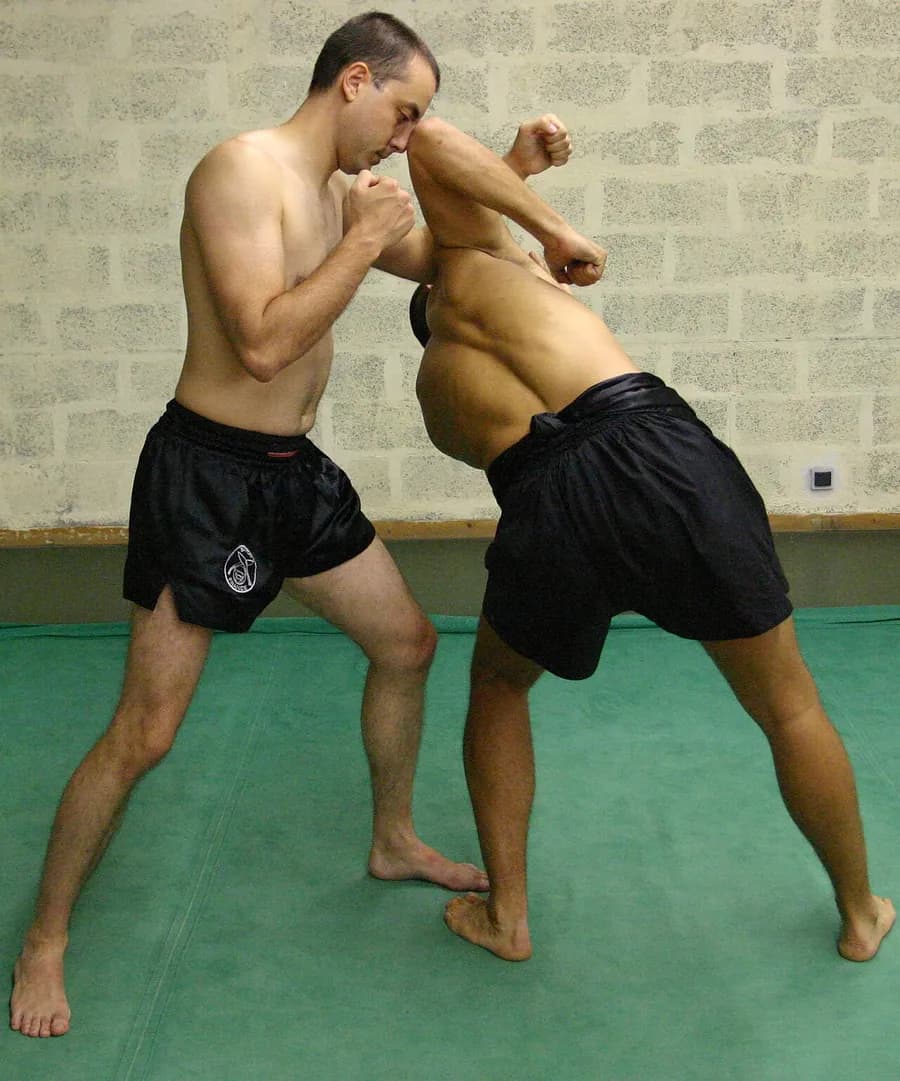
- Clinch fighting — controlling posture and head position to land knees, elbows, and headbutts is central to the game.
- Attritional toughness — with knockouts historically the only path to victory, conditioning and the will to keep pressing define successful fighters.
Modern Practice and Relevance
Lethwei today lives a double life: a proud national sport within Myanmar and an object of intense curiosity for the wider fight world, which is drawn to its rawness precisely because so few sanctioned formats still allow bareknuckle striking, let alone headbutts. For students of combat sports it is a vivid case study in how rules create style. Strip away the gloves, legalize the head, and remove the safety valve of a points decision, and you get a discipline that prizes finishing power and durability above busy volume. A few of its concepts, particularly clinch control and the pressure to end fights decisively, resonate with MMA, but Lethwei's real significance may be as a living reminder of how differently a striking art evolves when the ruleset refuses to blink.
Technical Deep Dive
Lethwei is most effective when practitioners can control the transition moments between range, rhythm, and balance. Those transition moments are where technical identity becomes visible under pressure.
A useful way to study this style is to separate visible techniques from invisible skills. The visible layer includes strikes, entries, grips, and finishes; the invisible layer includes posture management, timing discipline, and recovery decisions after failed attempts.
In striking-heavy contexts, this style rewards athletes who can maintain stance integrity while changing pace. Distance ownership, exit discipline, and defensive resets determine whether offensive output remains sustainable late in rounds.
In weapons-influenced systems, understanding line control and timing windows is as important as tool mechanics. Clean positioning and tactical patience often matter more than speed alone.
Strengths
- Bareknuckle striking with punches, kicks, elbows, knees, and headbutts
- Clear technical pathways that are easy to study and pressure-test
- Strong transfer into modern competition when timing and distance matter
- Useful footwork, tempo control, and scoring mechanics under pressure
Trade-offs
- Training quality varies widely between schools, so fundamentals matter more than labels
- Sport rules can sharpen some attributes while reducing others
- The style's original context may differ from how it is practiced today
- Pure striking systems may need clinch and takedown defense layers for mixed-rule environments
Priority Focus
- Consistent drilling under light to medium pressure
- Testing fundamentals against resisting partners before advancing
- Building attributes from basic to complex
- Develop footwork, head movement, and distance management
Coaching Notes
- Progress from cooperative drills to constrained sparring before full resistance
- Prioritize repeatable combinations and transitions over isolated highlight techniques
- Use video review to compare tactical intent with actual round behavior
- Track conditioning in relation to technical quality, not only output volume
- Drill entries and exits as one unit so offense and defense stay connected