
Martial Arts Library
Kenjutsu (Katana Cutting / Tameshigiri)
6/18/2026 · Kenji Watanabe
Origin
Japan, with techniques documented from feudal samurai traditions through modern formalized study
Primary Focus
Sword technique, footwork, timing, kata forms, and cutting mechanics
What It Is
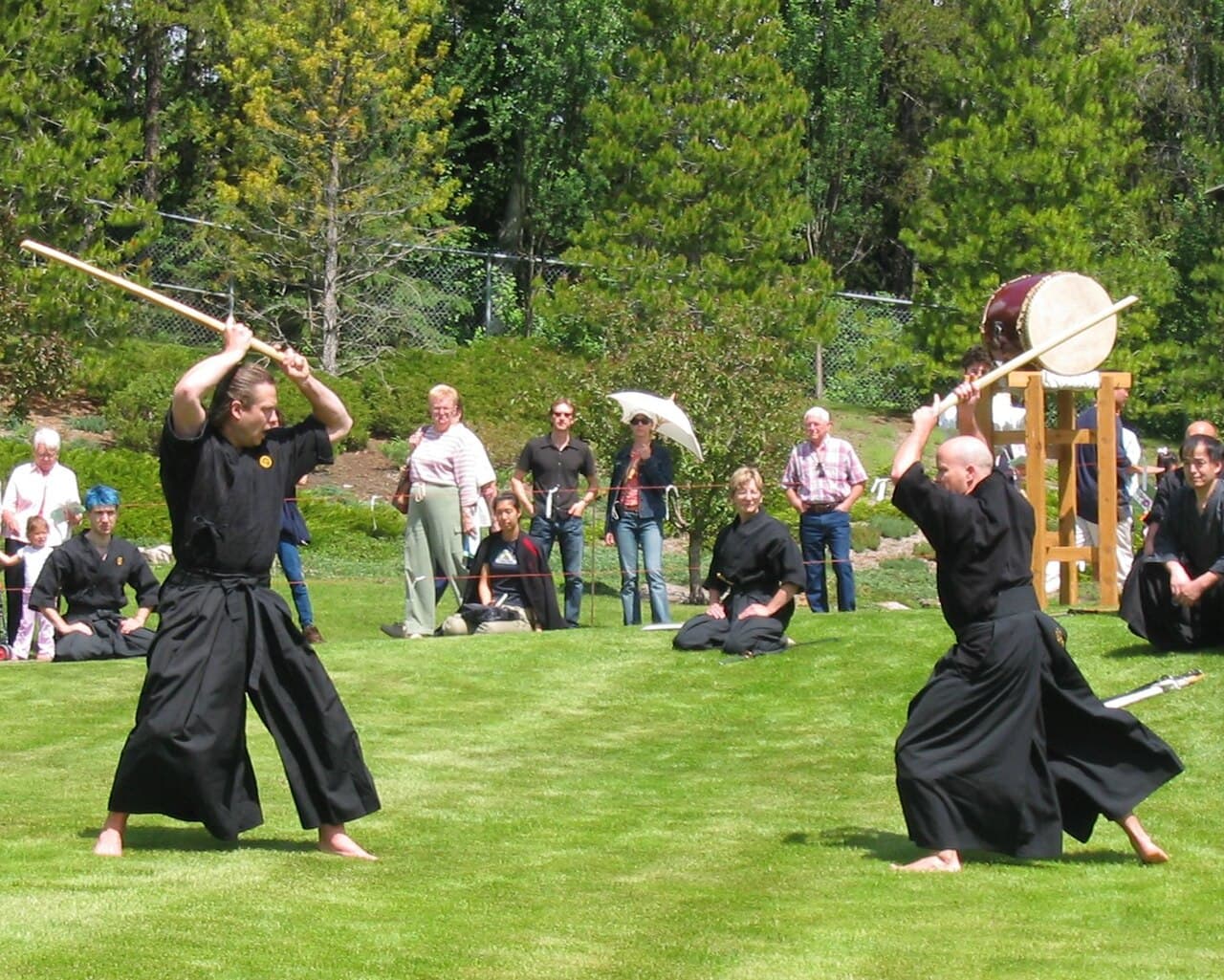
Kenjutsu is the traditional Japanese martial art of sword fighting, encompassing form practice (kata), sparring (kumite), and cutting practice (tameshigiri) to develop technical mastery and philosophical integration.
History Snapshot
Kenjutsu is the classical Japanese art of swordsmanship, developed by the samurai for the battlefield and preserved through hereditary schools known as koryu. It matured during Japan's feudal wars, was refined into a philosophical and technical discipline during the long peace of the Edo period, and survives today through both traditional lineages and the sport of kendo that grew out of it.
What It Is
Kenjutsu is the classical Japanese art of the sword: the practical fighting methods the samurai used with the katana and its relatives. The name simply pairs ken, sword, with jutsu, technique or art. Unlike its modern descendant kendo, which is a sport contested with bamboo shinai and protective armor under referee scoring, kenjutsu is the older combat root, focused on the mechanics of drawing, cutting, and defeating an armed opponent. Practice traditionally centers on kata, paired or solo forms that preserve a school's techniques, and often includes tameshigiri, test-cutting through rolled straw mats or bamboo to prove that a cut is real and not merely pretty.
Origins and History
Kenjutsu was born from necessity on the battlefields of medieval Japan. As a warrior class rose to political dominance from roughly the 12th century onward, skill with the sword became both a practical survival tool and a marker of samurai identity. Early sword use sat alongside archery and spear work in the broad martial education of the warrior, but the sword carried a special cultural weight, eventually mythologized as the "soul of the samurai."
The art crystallized into organized systems during Japan's era of near-constant civil war, the Sengoku or "Warring States" period that ran through the 15th and 16th centuries. In that violent climate, distinct schools, called ryu or ryuha, began to form around individual master swordsmen who codified their methods and passed them to students. These were the original koryu, the old schools, some of which survive by name to this day. Their founders were often warriors of formidable reputation, and the lore surrounding them, tales of duels, insights gained through austere training, and famous rivalries, became part of the tradition itself. The most legendary of these figures, such as Miyamoto Musashi, are remembered as much for their writings on strategy and mindset as for their prowess with the blade, though the details of such famous lives blur into legend and should be read with some caution.
A decisive turn came with the unification of Japan and the long peace that followed under the Tokugawa shogunate, beginning in the early 17th century. With large-scale battles largely ended, the practical need for battlefield swordsmanship faded, but the schools did not disappear. Instead, kenjutsu deepened. Freed from the immediate demands of war, masters refined their systems into vehicles for discipline, character, and philosophical development, absorbing the influence of Zen Buddhism and Confucian ideals about duty and self-cultivation. The sword became a path, not just a weapon.
Development Over Time
The peaceful Edo period was, paradoxically, a golden age for sword arts precisely because they no longer had to kill. Training methods evolved, including the eventual adoption of the flexible bamboo shinai and protective armor that allowed harder free sparring without maiming partners, an innovation that laid the groundwork for what would later become kendo.
The samurai class was formally abolished in the reforms of the late 19th century, and the wearing of swords was banned, a shock that threatened to sever the living tradition. Kenjutsu survived this rupture in two broad ways. The competitive, sporting side coalesced into modern kendo, standardized in the 20th century and practiced by millions. Meanwhile, a number of the old koryu persisted quietly, transmitting their kata and their specific techniques through unbroken teacher-to-student lineages, more concerned with faithful preservation than with competition or spectacle. Both streams flow from the same source.
Core Techniques and Concepts
- Kata: Prearranged forms, often paired, that store a school's cutting patterns, defenses, and strategy.
- Cutting mechanics (hasuji): Correct blade angle and edge alignment so a cut bites cleanly rather than slapping.
- Distance and timing (ma-ai): Managing the gap and the instant of engagement against an armed opponent.
- Footwork and body movement: Coordinated stepping and posture that deliver the whole body's weight into a cut.
- Tameshigiri: Test-cutting on straw or bamboo targets to verify technique under real resistance.
- Mindset (zanshin): Sustained awareness and composure before, during, and after an exchange.
Modern Practice and Relevance
Kenjutsu is not a combat sport, and it makes no pretense of being one. Its weapons and its aims belong to a different age. What it offers the modern practitioner is a rigorous education in body mechanics, timing, breath, and mental focus, refined across centuries and transmitted with unusual care through the surviving koryu and the global spread of kendo and related sword arts like iaido.
Its relevance to today's combat athletes is largely indirect but genuine. Fighters and coaches who cross-train weapon arts often speak of the sharpened sense of distance, the calm under a committed attack, and the disciplined attention that sword work cultivates. Beyond that, kenjutsu stands as a living link to the warrior culture that shaped so much of the martial-arts world's language and values, a reminder that long before gloves and cages, the pursuit of skill under lethal pressure was already producing profound ideas about timing, composure, and the meeting of two committed opponents.
Technical Deep Dive
Kenjutsu (Katana Cutting / Tameshigiri) is most effective when practitioners can control the transition moments between range, rhythm, and balance. Those transition moments are where technical identity becomes visible under pressure.
A useful way to study this style is to separate visible techniques from invisible skills. The visible layer includes strikes, entries, grips, and finishes; the invisible layer includes posture management, timing discipline, and recovery decisions after failed attempts.
In weapons-influenced systems, understanding line control and timing windows is as important as tool mechanics. Clean positioning and tactical patience often matter more than speed alone.
Strengths
- Sword technique, footwork, timing, kata forms, and cutting mechanics
- Clear technical pathways that are easy to study and pressure-test
- Strong transfer into modern competition when timing and distance matter
Trade-offs
- Training quality varies widely between schools, so fundamentals matter more than labels
- Sport rules can sharpen some attributes while reducing others
- The style's original context may differ from how it is practiced today
Priority Focus
- Consistent drilling under light to medium pressure
- Testing fundamentals against resisting partners before advancing
- Building attributes from basic to complex
Coaching Notes
- Progress from cooperative drills to constrained sparring before full resistance
- Prioritize repeatable combinations and transitions over isolated highlight techniques
- Use video review to compare tactical intent with actual round behavior
- Track conditioning in relation to technical quality, not only output volume