
Martial Arts Library
Goju-ryu Karate
6/18/2026 · Marcus Delgado
Origin
Okinawa, Japan; formalized in early 20th century by Chojun Miyagi
Primary Focus
Hard and soft techniques, internal power, practical fighting application, and conditioning
What It Is
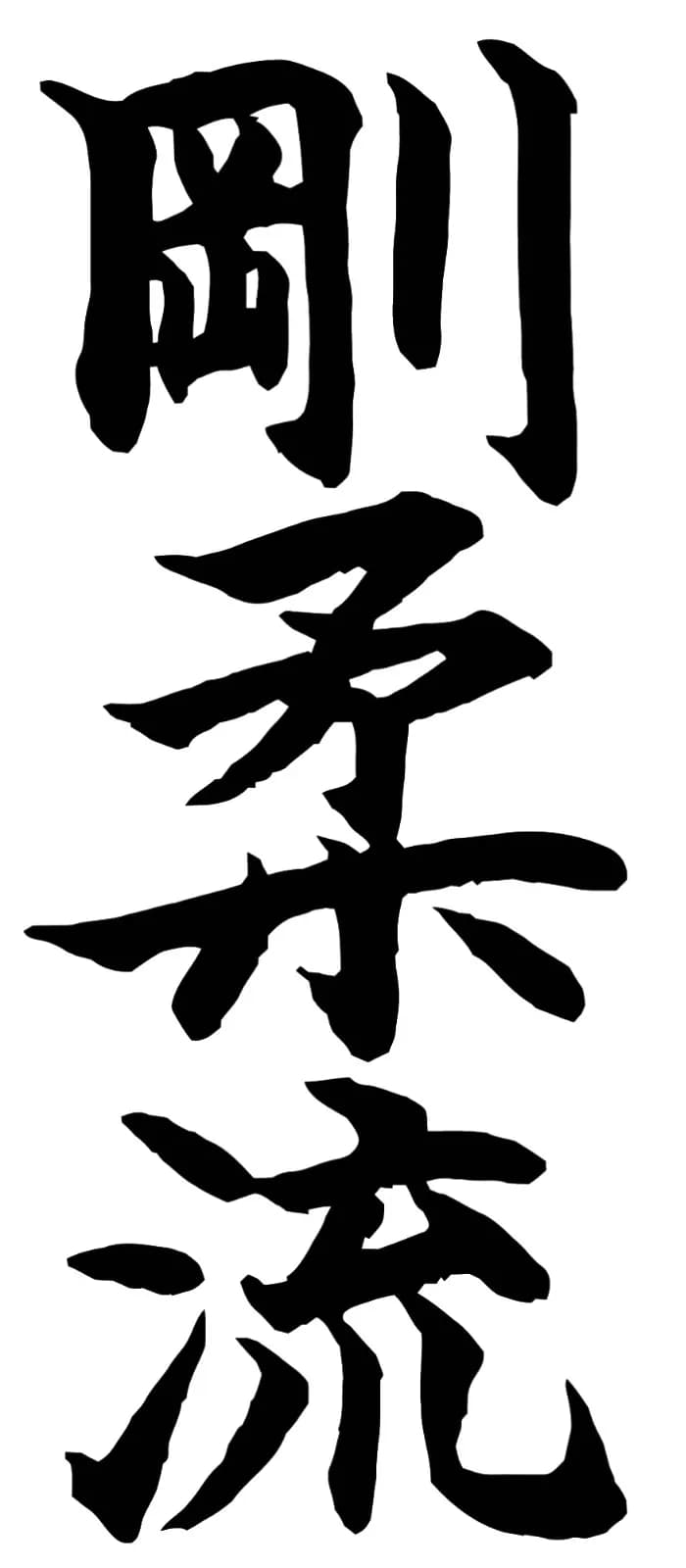
Goju-ryu is a traditional Okinawan karate style that fuses hard, direct striking with soft, circular defense, built on close-range fighting, deep breathing, and body conditioning.
History Snapshot
Goju-ryu descends from the Naha-te tradition of Okinawa and the Chinese boxing that Kanryo Higaonna studied in Fujian in the 19th century. His student Chojun Miyagi synthesized and named the style in the early 20th century, and it became one of the four major Okinawan karate traditions before spreading worldwide.
What It Is
Goju-ryu is one of the principal traditional styles of Okinawan karate, and its name states its philosophy outright: go means hard, ju means soft, and the style lives in the tension between the two. Hard here refers to direct, powerful striking driven by rooted stances and coordinated body mechanics. Soft refers to circular, yielding movements that receive and redirect an incoming force rather than meeting it head-on. The style favors close range, where trapping, short strikes, and grappling become possible, and it is unusually attentive to breathing and body conditioning. Where some karate styles reward long-range speed, Goju-ryu tends to plant, absorb, and answer from inside the opponent's reach.
Origins and History
The story begins on Okinawa, the largest island of the Ryukyu chain, which for centuries was an independent kingdom sitting at a crossroads of trade between Japan, China, and Southeast Asia. That position mattered. Okinawa developed its own indigenous fighting methods, known simply as te, meaning hand, and these blended over time with Chinese martial arts arriving through trade and diplomatic contact, particularly with the southern province of Fujian. By the 19th century, distinct local streams had formed, usually named for the towns where they were practiced. Goju-ryu descends from the tradition associated with the port city of Naha, called Naha-te.
The pivotal figure in that lineage was Kanryo Higaonna. Born in Naha in the mid-19th century, he is traditionally said to have traveled to Fujian in China as a young man and studied Chinese boxing there for a number of years before returning to Okinawa to teach. The details of his time in China are known mostly through oral tradition and are debated in their specifics, but his influence on what became Goju-ryu is not in doubt. He brought back an approach heavy in close-range technique, conditioning, and the breathing-driven forms that would become central to the style.
Higaonna's most consequential student was Chojun Miyagi, born in Naha in 1888. Miyagi trained under Higaonna for years, and after his teacher's death he is credited with organizing, refining, and expanding the system into a coherent whole. He too is traditionally said to have traveled to Fujian to deepen his study. It was Miyagi who gave the style its name in the 1930s, reportedly drawing the phrase from a classical Chinese text on martial principles that spoke of hardness and softness. He worked to bring karate into the mainstream of Okinawan and Japanese life, teaching in schools and demonstrating publicly during the years when karate was being introduced to mainland Japan and formalized into named styles.
Development Over Time
Karate changed enormously in the 20th century, and Goju-ryu changed with it. As the art spread from Okinawa to mainland Japan and then across the world, teaching became more organized and standardized. After Miyagi's death in 1953, senior students carried the style in several directions. Some remained on Okinawa, preserving the older, more combative emphasis on conditioning and close-range application. Others established influential branches in mainland Japan and abroad, and one lineage grew into a large international organization with its own competitive and grading structures. This branching produced a family of related Goju-ryu schools that share a common technical core while differing in emphasis, kata interpretation, and approach to sport. The famous conditioning form Sanchin, with its tension and deep breathing, remained a shared thread throughout.
Core Techniques and Concepts
- Hard and soft integration: Direct striking (go) and circular, yielding defense (ju) are trained as two halves of one method.
- Sanchin breathing: A foundational form using dynamic tension and controlled breath to build structure, rooting, and internal power.
- Close-range fighting: The style favors infighting, where short strikes, traps, and control become available.
- Circular deflection: Open-hand blocks and turning movements redirect force rather than clashing against it.
- Body conditioning: Deliberate toughening of the limbs and torso to strike hard and absorb impact.
- Grappling and control: Throws, joint locks, and close-range control appear alongside the striking, especially in older applications.
Modern Practice and Relevance
Goju-ryu today is practiced worldwide, taught both as traditional budo and, in some branches, as a competitive sport under modern karate rules. Its inclusion of karate in the broader Olympic and tournament landscape has given the style new visibility, though many practitioners still prize its self-defense roots over point sparring. For the combat-sports fan, its most interesting quality is its commitment to close range. Long before mixed martial arts made the clinch fashionable, Goju-ryu was building a striking method meant to work inside an opponent's reach, tied together with breathing and conditioning. Fighters who cross-train karate often draw on exactly that: the rooted power, the short explosive strikes, and the habit of standing and trading in the pocket rather than always fighting from distance.
Technical Deep Dive
Goju-ryu Karate is most effective when practitioners can control the transition moments between range, rhythm, and balance. Those transition moments are where technical identity becomes visible under pressure.
A useful way to study this style is to separate visible techniques from invisible skills. The visible layer includes strikes, entries, grips, and finishes; the invisible layer includes posture management, timing discipline, and recovery decisions after failed attempts.
In striking-heavy contexts, this style rewards athletes who can maintain stance integrity while changing pace. Distance ownership, exit discipline, and defensive resets determine whether offensive output remains sustainable late in rounds.
In weapons-influenced systems, understanding line control and timing windows is as important as tool mechanics. Clean positioning and tactical patience often matter more than speed alone.
Strengths
- Hard and soft techniques, internal power, practical fighting application, and conditioning
- Clear technical pathways that are easy to study and pressure-test
- Strong transfer into modern competition when timing and distance matter
- Useful footwork, tempo control, and scoring mechanics under pressure
Trade-offs
- Training quality varies widely between schools, so fundamentals matter more than labels
- Sport rules can sharpen some attributes while reducing others
- The style's original context may differ from how it is practiced today
- Pure striking systems may need clinch and takedown defense layers for mixed-rule environments
Priority Focus
- Consistent drilling under light to medium pressure
- Testing fundamentals against resisting partners before advancing
- Building attributes from basic to complex
- Develop footwork, head movement, and distance management
Coaching Notes
- Progress from cooperative drills to constrained sparring before full resistance
- Prioritize repeatable combinations and transitions over isolated highlight techniques
- Use video review to compare tactical intent with actual round behavior
- Track conditioning in relation to technical quality, not only output volume
- Drill entries and exits as one unit so offense and defense stay connected