
Martial Arts Library
Glima
6/17/2026 · Lena Fischer
Origin
Iceland and the Nordic region
Primary Focus
Balance manipulation, upright grips, and throwing control
What It Is
Glima is a traditional Nordic belt-wrestling style built on upright posture, fixed grips, constant circling movement, and clean throws that break an opponent's balance.
History Snapshot
Glima is generally traced to the wrestling culture of the Norse settlers who reached Iceland during the Viking Age, and references to grappling appear in the medieval Icelandic sagas. It endured on isolated farms for centuries and was revived as an organized national sport in the modern era.
What It Is
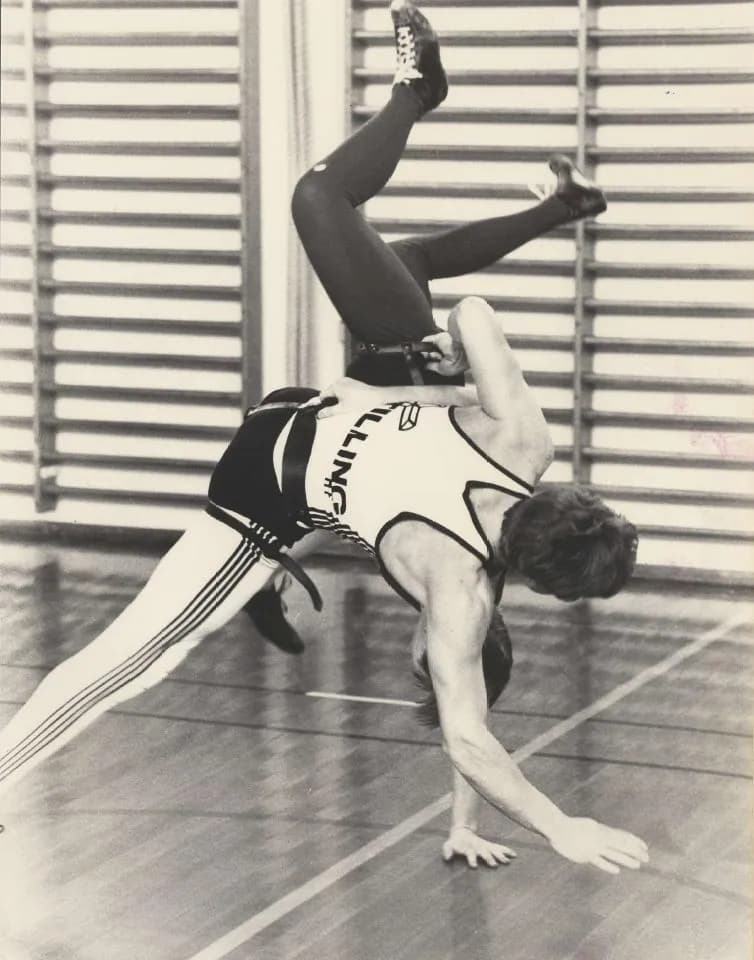
Glima is a folk wrestling tradition from Iceland, and it does not look much like the ground-focused grappling most fight fans know. Two wrestlers stand tall, take a fixed grip, most commonly on a special harness of belts worn around the waist and thighs, and then circle continuously while trying to throw one another off balance. The upright posture is not incidental; it is the whole point. Stalling, stiffening, and muscling for a hold are frowned upon. A clean win comes from timing and footwork, from steering an opponent into the exact moment where a trip or a lift can topple them. The style prizes control and composure, and a good bout has an almost dance-like quality of constant motion.
Origins and History
Glima's origins are generally traced back to the Norse settlers who arrived in Iceland during the Viking Age, from the late 9th century onward. Wrestling was a widespread pastime across the medieval Nordic world, and the Icelandic sagas, the great prose narratives written down in the 13th century about earlier generations, contain numerous references to men grappling, both in friendly contest and in deadly earnest. Some saga episodes describe wrestling as sport at gatherings; others describe it turning lethal. Because these accounts were composed well after the events they portray and were literary as much as historical, they should be read carefully, but they leave little doubt that grappling was a familiar and valued part of Norse culture.
What is harder to establish is a continuous, documented line from those saga-era contests to the specific rules of modern Glima. The honest picture is that wrestling persisted in Iceland as a folk practice for many centuries, passed informally from one generation to the next on scattered rural farms, in an island society that remained small and isolated. Over that long stretch, local customs and grip conventions developed, and different regional forms are traditionally spoken of, including a rougher, harder-hitting variant and the more refined belt-grip style that became the standard. Precise dates and named originators for these variants are largely absent, and reputable accounts tend to describe them as traditions rather than inventions.
The pivotal modern chapter came in the 19th and early 20th centuries, a period when many European nations were rediscovering and codifying their folk sports as expressions of national identity. In Iceland, which was moving toward independence from Danish rule, Glima was embraced as a distinctly Icelandic heritage. Enthusiasts organized clubs, wrote down rules, and staged formal competitions, and the belt-harness style was cemented as the national form. From that point Glima had governing structures, championships, and a place in the country's sense of itself.
Development Over Time
Through the 20th century Glima settled into a regulated sport with a strong emphasis on sportsmanship and clean technique. The rules reward the upright, mobile style and penalize defensive stalling, and the requirement to keep moving gives matches their characteristic flowing rhythm. National championships have run for well over a century, and the sport is closely tied to Icelandic cultural events and physical education. Beyond Iceland, interest has spread modestly through the wider Nordic region and among enthusiasts of historical European martial arts, some of whom study Glima as a window into older Northern grappling. Efforts to revive the harder combative variants have accompanied that curiosity, though the belt-grip sport remains the living mainstream.
Core Techniques and Concepts
- Fixed belt grip: Both wrestlers take a set hold on the harness, removing grip-fighting and forcing the contest onto footwork and timing.
- Upright posture: The body stays tall and mobile; bending low or clinching to stall is against the spirit of the art.
- Continuous circling: A mandatory stepping movement keeps the bout dynamic and creates the openings for throws.
- Balance breaking: Points come from off-balancing an opponent and toppling them, not from forcing a pin on the ground.
- Trips and hip work: Leg trips, hooks, and hip lifts convert a moment of lost balance into a throw.
- Composure and sportsmanship: Control and fair conduct are built into the rules and the culture around them.
Modern Practice and Relevance
Glima survives today mainly as a heritage sport, practiced and celebrated in Iceland and by a scattering of enthusiasts abroad. Nobody would mistake it for a complete fighting system, and its fixed-grip, upright rules make it a niche pursuit rather than a feeder into mixed martial arts. Its value for the modern fan is more conceptual. Glima is a clean demonstration that stand-up wrestling can be built around timing, balance, and constant movement instead of raw power and grinding pressure, an idea that resonates with any grappler who has learned that a well-timed trip beats a strong-arm every time. As a surviving thread of Viking-age physical culture, it is also simply a fascinating piece of living history.
Technical Deep Dive
Glima is most effective when practitioners can control the transition moments between range, rhythm, and balance. Those transition moments are where technical identity becomes visible under pressure.
A useful way to study this style is to separate visible techniques from invisible skills. The visible layer includes strikes, entries, grips, and finishes; the invisible layer includes posture management, timing discipline, and recovery decisions after failed attempts.
In grappling-heavy contexts, the deepest competitive edge usually comes from connection quality rather than move count. Hand-fighting, shoulder pressure, and angle denial often decide outcomes before obvious scoring actions appear.
Strengths
- Balance manipulation, upright grips, and throwing control
- Clear technical pathways that are easy to study and pressure-test
- Strong transfer into modern competition when timing and distance matter
- Reliable clinch and control structures that reward leverage over raw strength
Trade-offs
- Training quality varies widely between schools, so fundamentals matter more than labels
- Sport rules can sharpen some attributes while reducing others
- The style's original context may differ from how it is practiced today
- Ground-heavy systems can be harder to apply against strong anti-grappling or striking-heavy opponents without cross-training
Priority Focus
- Consistent drilling under light to medium pressure
- Testing fundamentals against resisting partners before advancing
- Building attributes from basic to complex
- Practice position control and transitions before submissions
Coaching Notes
- Progress from cooperative drills to constrained sparring before full resistance
- Prioritize repeatable combinations and transitions over isolated highlight techniques
- Use video review to compare tactical intent with actual round behavior
- Track conditioning in relation to technical quality, not only output volume
- Build positional chains first, then layer submissions once control is consistent